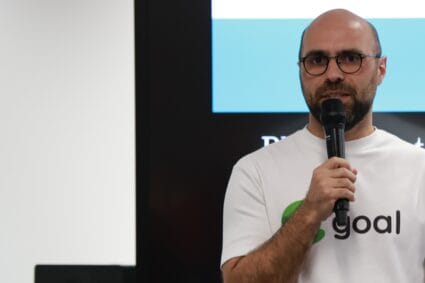





Cătălin Stanciu: I like to begin with a question that I ask everyone I speak with in this format. Tell me, who is Luke Sniewski and what does he have to say about himself?
Luke Sniewski: Okay. That’s a great question. Who is Luke Sniewski? Well, the answer that comes to mind straight away is: I am just another curious human being who had his own set of challenges that made him want to figure out why he was behaving the way he was, why he was thinking the way he was, and why he was reacting the way he was. So, for me, I’m just walking the path of being a human being and learning about myself, and the world in the process.
Cătălin Stanciu: In my opinion, you are part of what might be called a new generation of therapists, or somatic therapists. What would you say about the fact that there are certain characteristics that distinguish a young and competent therapist from the generation of therapists who trained them?
Luke Sniewski: I think I occupy a bit of a middle ground, where I’m training the next generation, but I’ve also been trained by the generation that came before me. And I think that we, as helping professionals, have a responsibility to continue to remain curious, to challenge, to question, and to grow. And some of the characteristics that I’m noticing, what is becoming popular, is the fact that people aren’t just talking about talk therapy. They’re understanding the role of the body within the process of healing. They’re understanding the role of many traditional, indigenous, and Eastern practices that have been around for a long time, and they’re being integrated into a bigger, more comprehensive model of therapy. I think it’s an exciting time to be part of that change.
Cătălin Stanciu: I think you are a young mentor too. In an age of individualism and artificial intelligence, where relationships are increasingly mediated by technology and digital media, what role does a mentor or a trainer still play?
Luke Sniewski: I think that when my peers and colleagues were first scared by the rapid rise of AI, there were some fears and speculation that AI would replace therapy. Maybe there was a moment of fear for me as well, but then, when I reflected, I realized that could never happen. Therapists who believe their only gift is the information they have may very well be replaced by AI, but that’s because therapy isn’t and shouldn’t be information-based. Therapy is relational and relationship-based. And so, for me, the role that a mentor, a trainer, or a therapist plays is precisely that: it’s the human-to-human connection and co-regulating relationship. Clients come to therapists like me, somatic therapists, because there’s the magic of co-regulation happening between two nervous systems, which hopefully includes the regulated nervous system of the therapist, and someone who experiences benefit from being in the presence of that grounded, embodied safety. AI doesn’t have that energetic resonance. It may never. For now, it’s just an algorithm. It’s information. So, if anything, the advent of AI seems to have created more job security for therapists and somatic therapists who work as I do.
Cătălin Stanciu: I’m very glad to hear that, because I believe the same thing. Therapy is a relationship. It’s an authentic and real relationship.
Luke Sniewski: Yes, of course. We’re agents of change, and AI will always agree with the person. The individual needs someone to challenge them, someone to challenge them beyond their comfort zone, someone to challenge their beliefs, to help them explore the unknown. And I’m not sure the degree to which AI can do that in the same way that a mentor or a therapist can.
Cătălin Stanciu: In „Somawise”, you advocate a shift from the mind toward the body. But where does the wisdom of the body end, and where does the risk of interpreting every bodily sensation as carrying some psychological truth begin?
Luke Sniewski: Well, the cool part is that I can answer your question by saying that the question has a fallacy in it. And the fallacy in the question is that a bodily sensation can never carry a psychological truth, because a bodily sensation is nothing more than objective sensory information. A psychological truth also may never exist, because a truth—a psychological truth, a mental truth—is a story, and that will depend from person to person.
That’s the first thing I needed to address. But generally speaking, even in ,,Somawise”, I talk about this explicitly: this is not about demonizing the mind. The mind is an incredible tool for creativity, for creation, for engaging in life, for consciously creating anything we really want, anything we put our mind to. The challenge is when someone is a slave to their reactive mind.
The control that the mind places over people is directly related to the amount of stress and trauma they carry in their own body. So, when I talk about the wisdom of the body, I talk about supporting the body to release tension, to release stress, which then allows the mind to be a tool that can be used and applied, as opposed to something that habitually controls everything that you do and say. So, it’s a relationship. It’s a relationship between mind and body, and they’re linked.
Today, as you can see, most people don’t listen to their body. And this is why ,,Somawise” has taken the stance of: well, let’s come back to the body first, and then you will learn how to appreciate and use your mind in a more productive, conscious way.
Cătălin Stanciu: I think it’s very hard to listen to the body when all of the time we are in our mind, when we say the brain is the only solution and not the body.
Luke Sniewski: That’s precisely the problem that most people find themselves in. They live in their mind. They live in an imaginary reality rather than living in the body, which allows them to participate directly with their life.
Cătălin Stanciu: Sometimes the mind is imaginary, but the body reminds us what is true.
Luke Sniewski: Correct. Well said.
Cătălin Stanciu: A person may understand the trauma extremely well and still continue to repeat the same patterns. What can working with the body achieve when psychological insight and narrative or talk therapy no longer seem to produce results?
Luke Sniewski: This is a common experience: people go to therapy and they discover truths. So they have an insight. The light bulb turns on and they have clarity: “Oh, this is what happened to me.” But the insight is only the first step. Because when we know or discover what happened to us, then we need to appreciate that what happened to us also created a condition within our body’s nervous system. It catalyzed adaptive behaviors. It conditioned habits in order to protect ourselves from future hurt and pain. So when we explore, “Oh, that’s what happened to us,” that’s just step one. Step two is then: how do I decondition a nervous system that now carries the consequences of what happened to me?
Let me give you an example. Let’s say I learned I was abused by a parent, and this shaped the way I interacted with someone of the same sex as an adult. So, let’s say a young child is hit by a father, and all of a sudden they realize in adult life that they are quite fearful in front of male authorities, or they find difficulties speaking up or voicing their truth in front of a male presence. And, of course, they go to therapy and they’re like, “I get it now. This is what happened when I grew up, and now it’s hard for me to engage with men that I project this role onto.” The behavior doesn’t disappear just because you now understand what happened. There’s still a condition in our nervous system that still happens and still seizes us, and it still dictates how we react.
Somatic therapy is the journey to go and feel the energy beneath those mechanisms, those buried emotions, that deep fear, which allows the body to release the tension that it was never allowed to safely experience before. This empowers us to enter into relationships in everyday life without our nervous system always being on high alert, reacting as if danger is perpetually present.
Cătălin Stanciu: Do you think it’s easier for a woman to understand and listen to her body and her emotions, or is it just a stereotype?
Luke Sniewski: I think this is a common stereotype. And it’s is an important misconception to address. There is a common belief that women are more emotional than men. I believe this is false, and I’ll explain why. Let’s imagine a reality where a male avoids his emotions by not saying something and retreating. Again, that’s a common experience: “No, I’m not going to talk about it. I’m going to keep it inside.”
Now let’s imagine a different reality, where a woman can also avoid her feelings, but not by hiding them—but by expressing them. She’s still not allowing herself to feel her emotions deeply because she’s talking about them, projecting them outward, in order to get rid of them. And this combination leads to the common myth that women are more emotional than men. To be connected to one’s emotions, however, requires us to feel them, not necessarily to react outward with them by merely expressing them. Sometimes that expression can be unconscious avoidance and even irresponsible.
Both sexes, both genders, both partners, both whatever, tend to be avoiding their emotions in different ways. And sometimes it looks like the stereotypical not talking about it, and sometimes it looks like the less talked-about version of it, which is vomiting it out onto others.
Cătălin Stanciu: In a culture where almost every form of suffering is increasingly explained through the lens of trauma, is there a risk of turning trauma into an universal explanation?
Luke Sniewski: I actually agree with your question, in that I prefer to use trauma in the most general, universal sense. Just like I don’t like the word addiction because it’s attached to stigma and shame, I don’t like trauma when it’s attached only to something horrific. For me, trauma is the conditioning that happens in our body as a result of what happened to us, and that is a universal human experience. This is what the teachings of Gabor Mate taught me.
We are born as a blank canvas, and then we are put in the psychological box of our caregivers’ environment. And the walls of that box include different religions, different experiences, as well as different expectations and rules. But no matter what box we’re put in – whether it looks traumatic or supportive on the surface – we’re still going to be boxed. That’s what happens. And so, the journey of life is for someone to become consciously aware of their box and say, “Do I want to live in this box or not?” And that is a choice.
And because trauma is the word that’s used nowadays, it comes with its own mainstream interpretations that don’t really mean much anymore. And so I prefer the more objective explanation of trauma: that it’s a universal human experience. And that’s not to discredit that there are significant, serious, tragic things that happen to children that shouldn’t happen to any children. But more often, the people who are seeking therapy are the ones who are minimizing themselves because they say, “Oh, this wasn’t so terrible. I didn’t have it so bad.” But they’re not appreciating that they were just as conditioned as anyone else because they’re human.
Cătălin Stanciu: I was very curious because I work with children who were sexually abused, and abuse is a reality. Sometimes I think about two types of trauma – a smaller one and a bigger one, considering their consequences.
Luke Sniewski: Yes. Exactly. You think you had a little trauma, but it still impacted your nervous system.
Cătălin Stanciu: It can be the same. And the mechanisms are the same.
Luke Sniewski: Exactly. The mechanisms are exactly the same. And here’s something else that’s the same between big-T trauma and small-t trauma: we didn’t put it there, but it’s our responsibility to break free from it. And that’s true for little-t trauma, but it’s also true for big-T trauma. And sometimes the hardest thing for someone to move away from, or someone to move through, when they have big-T trauma, is to let go of the story of victimhood and move towards a story of conscious healing and personal responsibility. It’s not the person’s fault. This is true. But no matter how much we might blame and finger point, the fact of the matter is that the consequences of our past now exist within our body in the present moment. This means that ultimately, it’s our responsibility to move beyond it.
Cătălin Stanciu: Yes. I don’t want to say about myself that “I am the trauma.”, I’m not the trauma.
Luke Sniewski: Yeah. Right. You got it.
Cătălin Stanciu And another personal question, and a curiosity: from your experience, what are the most unrealistic expectations clients bring to therapy?
Luke Sniewski: I talk about this a lot. It’s when clients come to therapy and they want to get rid of some aspects of themselves: “I don’t want to feel my sadness. I don’t want to feel anxious anymore. I don’t want to feel depressed.” And whenever we start a therapeutic journey with a sentence of “I want to get rid of something,” it’s going to be a path towards a dead end. Change isn’t linear, and change isn’t taking us somewhere else. Change is learning how to relate to our present-moment experience in a different way. In talk therapy I’ll say it this way: therapy requires working with the mind and the body. Even though I’m big on working with the body, we have to work a lot with the mind. Within the mental realm, the therapeutic journey is moving from a space of blame, self-judgment, criticism, and toward a space of understanding, acceptance, and compassion.
When we shift from judgment to compassion, it changes the way we relate to our experience. Because now, all of a sudden, instead of someone feeling sadness and saying, “I don’t want to feel this,” they say, “Oh, this is the sadness that a small child in me never had the opportunity to feel.” The shift in understanding changes how we move towards it. It changes how we label it. It changes how we feel our experience. So that’s why the mental journey is so important. From a somatic perspective, we need to slow down and give our body the space to process and integrate the experiences and emotions that we never had a chance to complete because there wasn’t a safe container for us to feel them within. With the right mental understanding, we are actually able to do that. And so this is how and why mind and body work together. The mind is the gatekeeper to the body. Once we gain access to the body within the safe container created by the therapeutic relationship, the client’s physiology can complete something that’s been pushed down for a very long time.
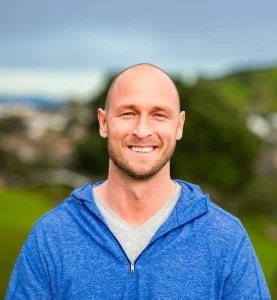
Luke Sniewski
is a somatic therapist, educator, author, and founder of Somawise. A Compassionate Inquiry Practitioner and Mentor with over 20 years of experience in health and wellbeing, Luke supports individuals and practitioners to explore unconscious patterns, reconnect with the body, and develop greater awareness, authenticity, and freedom.